

What Makes a Good Corporate Welcome Kit?
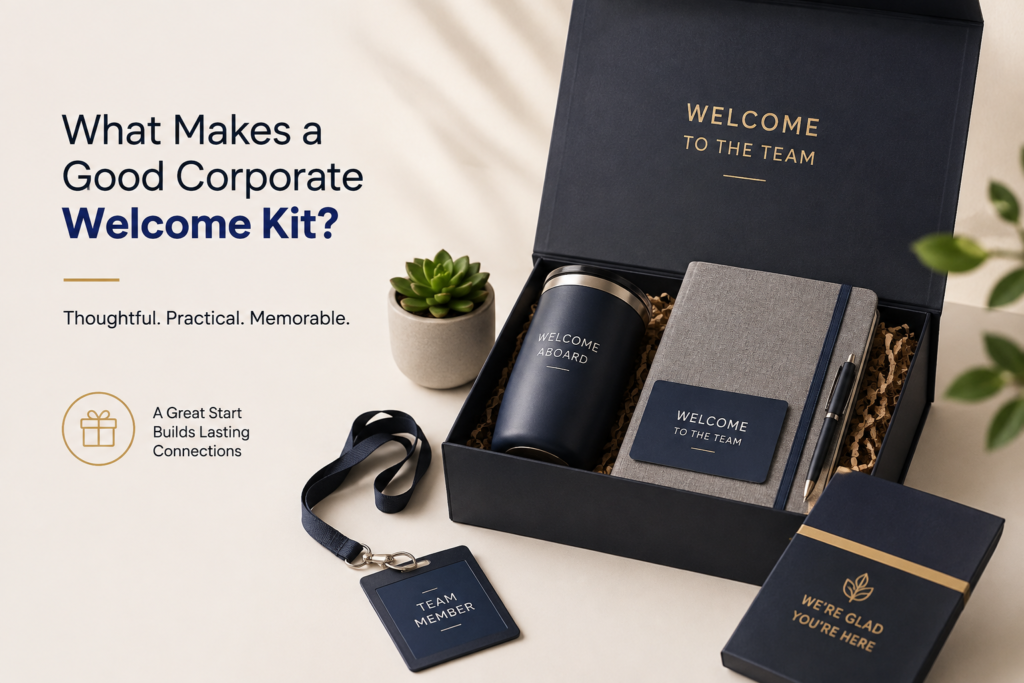
A good Corporate Welcome Kit does more than just introduce a new employee to a company. It hands them useful essentials, builds a sense of belonging, and quietly communicates what the organisation actually values, right from day one. For businesses in the UAE, that balance matters more than usual. Employees move between offices, client meetings, commuting, and remote work fairly regularly, so the best kits blend practical items with professional presentation and a few genuinely thoughtful personal touches. The goal isn’t to fill a box with branded merchandise for the sake of it. It’s to put together something employees will actually use. Start With Items Employees Will Keep Using The strongest employee welcome kits start with practicality first. Every item should earn its place in the employee’s working day, rather than just carrying a logo because there was room for one. A well-planned kit might include: These essentials give new starters things they’ll genuinely reach for – at their desk, between meetings, or on the commute in. Build the Kit Around One Anchor Item Every successful welcome package tends to benefit from one central item that holds the rest together. A laptop sleeve, backpack, or well-made tote bag can do this job particularly well. It gives the rest of the kit somewhere to live, while also being something the employee keeps using long after onboarding’s finished. The right choice really depends on the working environment. A laptop sleeve tends to suit office-based professionals. A backpack works better for employees commuting regularly. A structured tote can be the better fit for corporate events, conferences, or hybrid working setups. Whatever the anchor item ends up being, it should feel useful before it feels like a promotion. Choose Office Essentials That Reflect Your Brand Stationery is still a dependable part of company onboarding kits, but quality is what actually separates the good ones from the forgettable ones. A branded PU leather notebook paired with a well-finished metal pen feels a lot more considered than a stack of cheap promotional bits. Eco-friendly notebooks can work as an alternative too, particularly for businesses where sustainability genuinely sits inside the company culture rather than as an afterthought. Desk planners, document folders, cable organisers, and other small functional accessories can add value without bloating the size of the kit unnecessarily. The underlying principle’s pretty simple: fewer items employees will actually use beats more items they’ll quietly bin. Make Drinkware Part of Everyday Use A reusable bottle or thermal travel mug often ends up being one of the most frequently used items in the whole kit. For employees working in the UAE specifically, drinkware earns its place. A stainless-steel vacuum-insulated bottle helps keep drinks at the right temperature during warm commutes, while a thermal mug works well for coffee or tea across the working day. A bit of subtle branding keeps the company visible without turning the product into something that feels like an ad. Include Useful Tech and Desk Accessories Technology accessories help make new employee kits feel more relevant to how people actually work today. Depending on the role and the budget, businesses might consider: These tend to work well precisely because they solve small, everyday annoyances. Once something becomes part of someone’s regular setup, the branding gets seen again and again without any extra effort. Add a Personal Welcome Useful products create functionality. Personal touches create connection – and that difference matters more than it might seem at first glance. A short welcome note signed by the CEO, founder, department head, or immediate team leader can genuinely change how the whole kit lands. It’s the thing that turns a box of branded products into an actual introduction to the organisation. The message doesn’t need to run long. A few thoughtful lines welcoming the person, acknowledging what they bring to the role, and showing a bit of genuine enthusiasm can make the entire kit feel considerably more personal. It’s often one of the simplest parts of the whole package, and also one of the most memorable. Reflect Your Company Culture Through Merchandise Employee merchandise should say something about the organisation, not just carry its logo around. A premium cotton polo shirt or t-shirt tends to work well for companies with a more relaxed culture, event teams, hospitality businesses, and organisations where staff regularly represent the brand out in public. The design needs to line up with the company’s existing visual identity. Colours, typography, logo placement, garment quality – all of it feeds into whether employees actually want to wear the thing. When merchandise feels like something someone would choose for themselves anyway, it does a lot more work than a logo ever could on its own. Add a Thoughtful Local or Wellness Element A welcome kit doesn’t have to be all office products, either. A small regional or wellness-focused item can make the whole experience feel more distinctive. Depending on the company and the audience, that might include: These little additions bring in a more personal element while helping the kit feel like it actually belongs to the place the business operates in. For UAE-based companies welcoming employees from a range of backgrounds, a thoughtful regional touch can also help create a genuine sense of place. Keep Branding Professional and Consistent The point of a branded welcome kit was never to put a logo on every single surface going. Over-branding has a way of making genuinely useful products feel like promotional giveaways instead. It works far better when branding stays consistent, a bit restrained, and aligned with the company’s visual identity throughout. Worth thinking about: A cohesive kit ends up feeling considerably more premium, simply because every item looks like it was chosen as part of the same experience rather than thrown together. Design the Packaging as Part of the Experience Presentation starts before the employee even sees the individual products inside. A structured box, sleeve, or reusable bag makes the kit feel organised and genuinely considered. Items should sit logically, with the important pieces
